How Leads Move Through the Sales Pipeline
Define the four stages and thresholds that separate an accurate pipeline from a vanishing act.
Most sales teams have a pipeline. Far fewer have a pipeline that actually works the way they think it does. Leads come in, get labeled, sit in stages, and eventually either close or disappear—but the mechanics underneath that process, the reasons why some leads advance and others stall, often go unexamined. Understanding how leads are supposed to move through a pipeline, and where they actually get stuck, is the difference between a forecast you can trust and one that just looks plausible until the quarter ends.
Picture the pipeline as a river with a series of locks. Each lock only opens when a boat meets the right conditions. Not all contacts are equal, and treating them like they are is one of the fastest ways to wreck your conversion metrics.
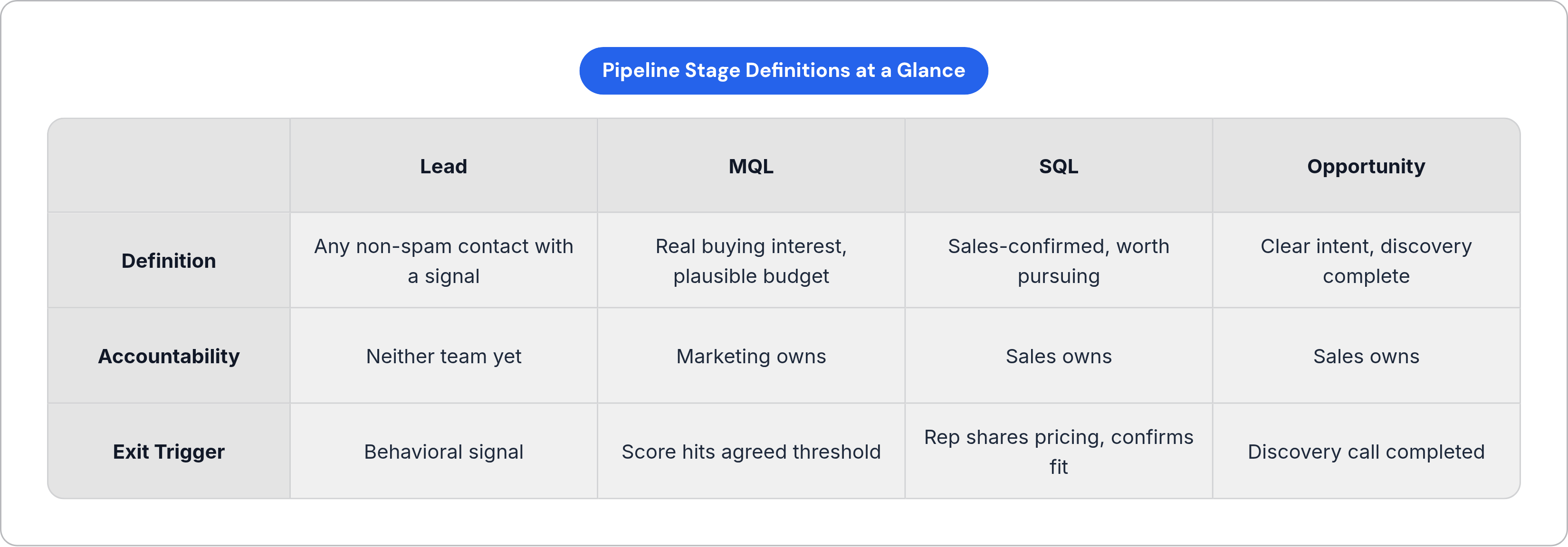
There's a four-tier hierarchy that maps onto the pipeline, and each tier means something specific:
Lead. Any non-spam contact who showed some signal. A form fill, a demo request, a newsletter signup. No clear buying intent yet.
MQL (Marketing Qualified Lead). This person has expressed real buying interest and can plausibly afford the product. Marketing's job is to produce these and pass them over.
SQL (Sales Qualified Lead). Sales has looked at this person, shared pricing or service detail, and confirmed the lead is worth pursuing.
Opportunity. Clear buying intent, usually confirmed after a discovery call. The formal sales process is underway.
The MQL-to-SQL handoff is where marketing accountability ends and sales accountability begins. When those two teams define "qualified" differently, that seam becomes a fault line, and most pipeline disputes trace back to it. Every transition requires evidence, not assumption. Advancing a lead before it meets exit criteria inflates the pipeline and corrupts every downstream metric. The numbers that matter at the end are win rate, average deal size, and contract value.
Where Leads Are Actually Lost
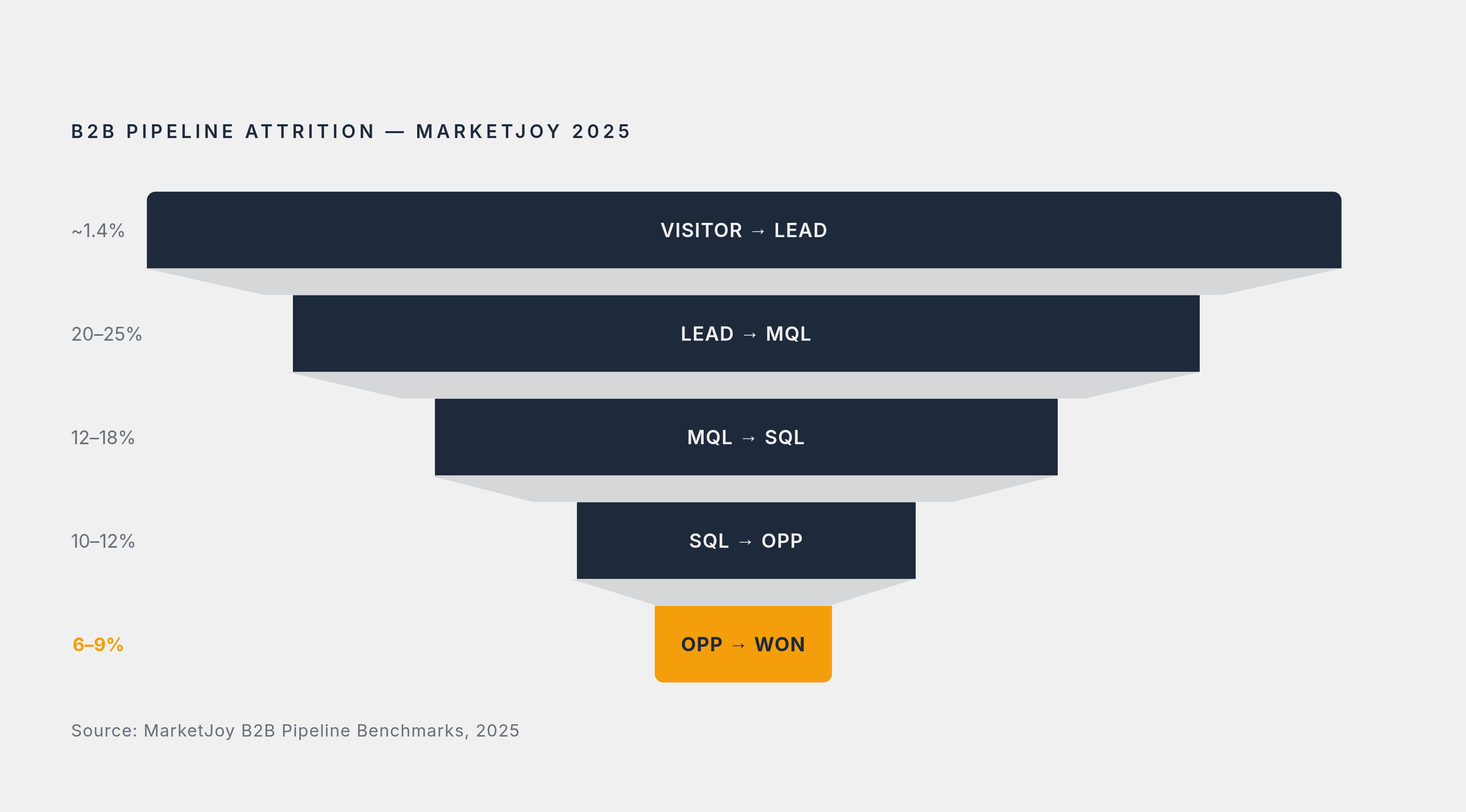
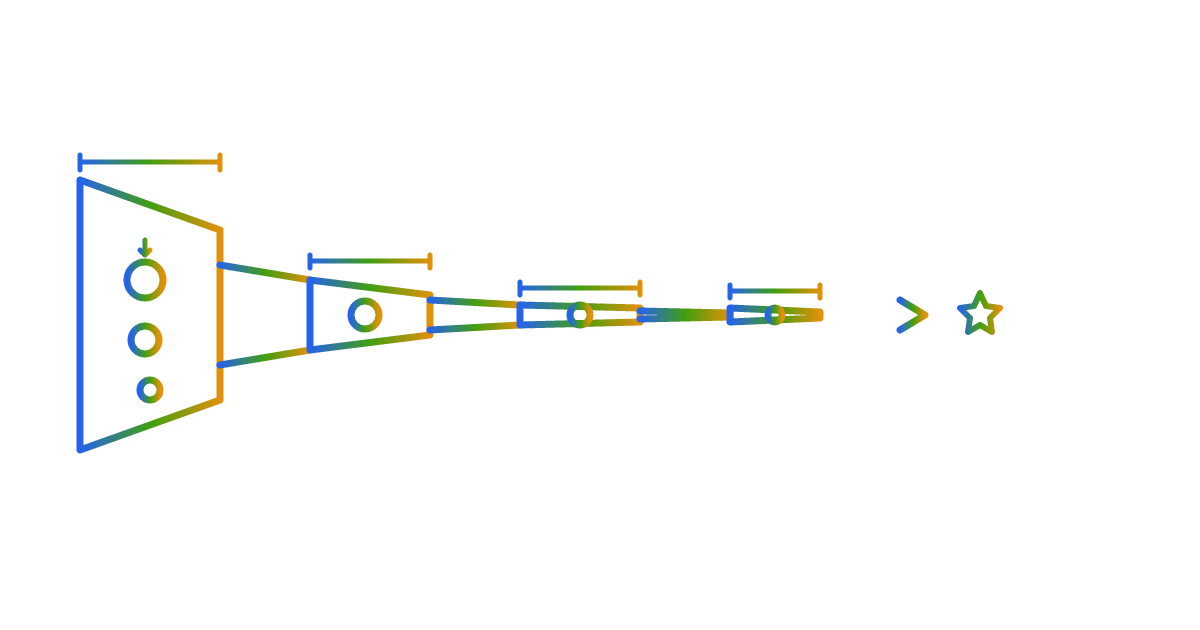
The top of the funnel is supposed to be leaky. For small-to-mid B2B SaaS, visitor-to-lead conversion averages around 1.4%. Enterprise companies run roughly half that, because buying complexity is higher and the audience is narrower.
From there, the drop-offs compound. Per MarketJoy's 2025 B2B pipeline benchmarks:
Other benchmark frameworks show higher rates at certain transitions—lead-to-MQL at 39–41%, MQL-to-SQL at 15–21%, SQL-to-opportunity at 42%, opportunity-to-close at 37–39%. The spread is wide. Establish your own baseline before benchmarking against anyone else's.
Most deals are lost at volume, meaning early stages. But most revenue is lost at value, meaning late stages. That frame is useful for deciding where to focus energy. Channel mix changes everything too: event-sourced leads close at higher rates late in the funnel, while email-sourced leads convert well early but fall off late. Aggregate conversion metrics hide those patterns entirely.
The MQL-to-SQL Bottleneck, Explained
This is the stage that breaks most pipelines, and the reason is straightforward. Marketing optimizes for volume. Sales optimizes for quality. When they're using different definitions of "qualified," those goals conflict directly. Marketing passes leads that aren't ready. Sales spends time disqualifying instead of advancing. The core failure is definitional—a language problem, not a lead quality problem in isolation.
The fix is a shared, auditable threshold that both teams agreed to, written down somewhere both sides can see. Lead scoring is the practical tool: assign numeric weights to behavioral and firmographic signals (pages visited, job title, company size, content downloaded), and a lead doesn't move until the score hits the agreed threshold. The handoff becomes a system instead of a judgment call.
Gains at this stage compound through every downstream conversion rate. Enterprise B2B SaaS teams with advanced lead scoring and tight sales-marketing alignment achieve MQL-to-SQL rates nearly double the industry median. What sustains that improvement is a jointly owned SLA: marketing commits to lead quality criteria, sales commits to response time and follow-up cadence. Without a written SLA, you have a conversation that both sides will remember differently.
Response Speed Kills or Converts Leads
Speed to first contact is one of the highest-leverage variables in early-stage conversion. Responding within a few minutes dramatically outperforms waiting even ten, and the advantage compounds further against thirty-minute or multi-hour delays. A lead is most focused on the problem the moment it comes in. Every hour that passes, they've moved on.
A large share of B2B leads never receive any response at all. Non-response is a bigger drag on pipeline than poor qualification. You can have a perfectly defined MQL threshold, a weighted lead score, and a jointly signed SLA, and still lose most of those leads before a rep says hello.
The implication is concrete: stage transitions should trigger immediate, defined actions. When a lead advances to MQL, a clock should start. A specific rep should own a specific next step within a specific window. A lead sitting in "MQL" status for 48 hours with no contact has effectively already been lost, even if the CRM still shows it as active.
Moving Leads That Aren't Ready Yet
Most leads don't convert on first contact. Sopro analyzed a large email dataset and found that the first and second follow-up touches together generated more than half of total responses: 28% from the first follow-up, 27% from the second, versus 25% from the initial email. Most reps stop before they get there—not because they're lazy, but because there's no system telling them not to.
Nurturing is that system. It's not about pushing leads forward before they're ready; it's about shortening the time it takes them to genuinely get there. Nurtured leads convert faster and close at higher deal values than non-nurtured leads, improving both velocity and deal size simultaneously.
What nurturing actually involves:
Sequenced, multi-touch outreach calibrated to the lead's current stage and behavior
Stage-appropriate content that answers the question the lead is probably asking right now, not generic product marketing
Re-engagement triggers for leads that go cold or stall between stages
Nurturing programs institutionalize the persistence that individual reps don't sustain across a full book of business. Automation is what makes it run at scale—manual processes can't reliably keep multi-touch sequences going across a full pipeline.
The Buying Committee Complicates Late-Stage Deals
The average B2B deal involves more decision-makers than it did five years ago, and for larger deals, committee size grows substantially. Late-stage pipeline management is a multi-stakeholder coordination challenge whether you've designed for it or not.
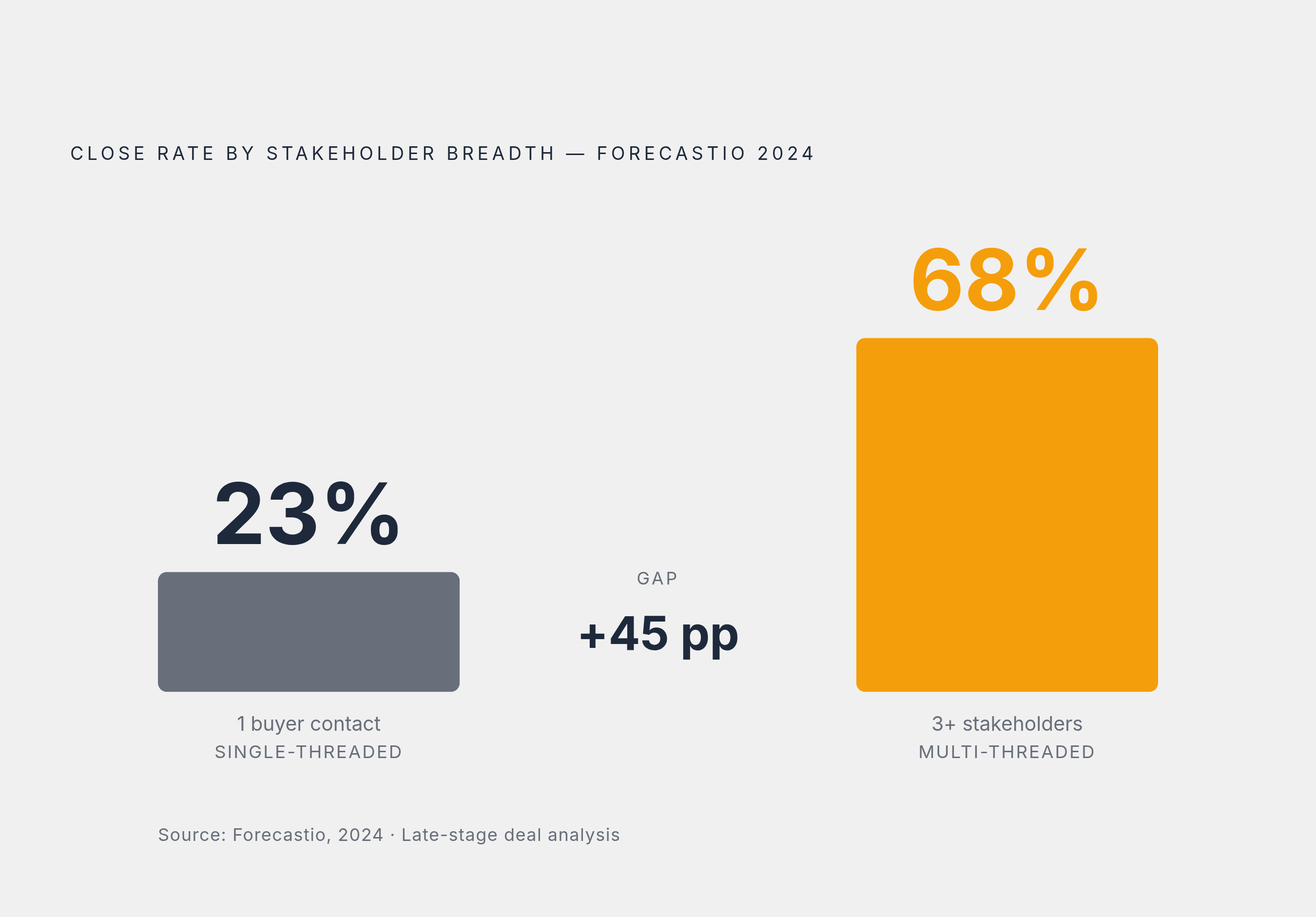
Gartner found in 2025 that nearly three-quarters of B2B buying teams exhibit unhealthy conflict during the decision process. Deals stall not because the seller did something wrong, but because the buyers can't align internally. The majority of opportunities also have only one point of contact on the buyer side, which means the seller's entire late-stage position depends on one person's ability to champion the deal internally. When that person lacks the authority or organizational capital to win the internal argument, the deal goes quiet and the seller has no visibility into why.
Per Forecastio's 2024 research, deals with three or more engaged stakeholders close at 68%. Single-threaded deals close at 23%. That gap is the difference between a functioning late-stage pipeline and an expensive way to generate proposals that don't convert.
Late-stage stage definitions should include a stakeholder map as an exit criterion. Advancing to "proposal" without knowing who else is in the room is a forecast integrity problem. When deals stall at this stage, discounting or pushing harder on the existing contact are both wrong moves. Stalling usually means internal buying consensus hasn't formed, and the seller's job is to help build it—which sometimes means asking uncomfortable questions about who else needs to be involved.
Why Sales Cycles Keep Getting Longer
Sales cycle length varies significantly by deal size and segment. Aggregate benchmarks are a starting point, not a standard.
SMB-focused SaaS typically moves through a cycle of 30–90 days from initial contact.
Mid-market companies usually see cycles in the 60–120 day range.
Enterprise deals routinely extend to six months or more, driven by procurement processes, committee size, and legal review.
Per Digital Bloom's 2025 data, cycle length is up 22% since 2022. Pipeline built to historical timing assumptions now closes later than teams expect. Forecast slippage is the predictable result of using old benchmarks in a slower market. Three converging forces are driving the lengthening: larger buying committees, tighter budgets producing more no-decision outcomes, and longer procurement and legal review processes. All three are structural.
Pipeline velocity ties this together—it's the rate at which deals generate revenue per day. A team can have strong conversion rates but poor velocity if deals sit too long between stages, producing missed quarters even when the top-level numbers look fine. Each stage should have an expected duration, and deals that exceed it should trigger a review. Ignoring it doesn't resolve the block; it just means you find out later, when there's less time to act.
What Consistent Pipeline Performance Actually Requires
In most organizations, a small fraction of reps generate a disproportionate share of revenue, which means most teams are one or two departures away from a significant production problem. Reps also spend a minority of their working time actually selling—administrative work, internal meetings, and manual process maintenance take the rest. Every hour spent on process friction is genuinely expensive, even when it doesn't show up on a report.
Pipeline volume is not the answer. Well-qualified opportunities with genuine budget, authority, need, and timeline convert at multiples of the rate of loosely qualified pipeline. Chasing volume at the expense of qualification criteria produces busy CRMs and missed forecasts.
The structural levers with the clearest demonstrated impact:
Defined entry and exit criteria for every stage, not left to rep judgment.
A joint MQL definition and SLA between marketing and sales.
Fast, structured response to new leads at the top of funnel.
Multi-stakeholder engagement discipline in late-stage deals.
Nurturing sequences that institutionalize follow-up persistence.
Stage-level duration monitoring to catch stall before it becomes loss.
Pipeline performance is not primarily a talent problem. It's a process and information problem. The teams that perform consistently have defined what "good" looks like at each stage and built systems to enforce it. Talent helps, but process is what makes performance repeatable when talent turns over.