Customer Relations vs Customer Service Distinctions
Service handles the crisis; relations builds the loyalty that survives one.

Customer service and customer relations get treated like synonyms in job postings and org charts, and that's the whole problem in one sentence. One handles what's on fire right now, while the other builds what happens over the next three years. Confuse them, and you end up staffing one while the other quietly starves, and nobody notices until the renewal numbers come in ugly.
There's a third term worth naming here: customer experience, or CX. It's the umbrella over everything, every touchpoint from the ad someone clicked to the return they filed last Tuesday. Fine word, useful in a deck, but this piece cares about the two functions living under that umbrella, and whether they ever actually talk to each other.
What customer service actually does and where it stops
Service starts when the customer starts it. Something breaks, a question comes up, a package vanishes somewhere between the warehouse and a doorstep in Ohio, and the entire job lives inside that one interaction. You win or lose it ticket by ticket, and nobody's grading on a curve.
The goal is resolution, whether the person hung up feeling okay or not, and a defined team owns this work: reps, tech support, team leads, all judged on speed and whether the fix held.
The metrics stay narrow on purpose, and for good reason. CSAT measures how someone feels right after the call ends, while First Contact Resolution asks whether the fix survives without a callback. Industry benchmarks put average handle time around six minutes and ten seconds in 2025. Add Customer Effort Score, abandonment rate, cost per resolution, and you've got a dashboard, and every number on it measures one moment in isolation and nothing else.
Service reaches its limit at the edge of the ticket: it doesn't reach out first, doesn't shape what happens between tickets, and doesn't track where the customer lands a year from now. That's somebody else's job entirely, and the workload keeps climbing regardless. The large majority of service leaders report that customer expectations have risen year over year, and many reps hit record ticket volume in 2024. Nobody built a second floor onto this building; it just got heavier on its own weight.
What customer relations does that customer service cannot
Relations flips the direction. The company reaches out first, unprompted, before the customer ever asks, and its territory covers the whole lifecycle: onboarding, the long stretch of ordinary use, renewal, that moment a customer starts telling a friend about you without being paid to.
The goal isn't "did this call go well." It's whether this person is still around in a year, spending more, telling people, an entirely different clock.
Relations runs in two modes, and they don't get equal airtime. A reactive piece handles complaints and escalations, overlapping plenty with service. The proactive piece goes further, anticipating a need before anyone asks, checking in between purchases, building something that has nothing to do with a ticket number, and service can't touch that piece because it wasn't built to reach that far.
Ownership spreads out wider, too, and messier. Customer success might run point, but product, marketing, and sales are all supposed to feed it signals. In practice, half of them forget relations exists until a churn report lands on someone's desk. The metrics stretch across time instead of a single afternoon: Customer Lifetime Value, the total revenue a customer's expected to bring; Net Promoter Score, usually surveyed quarterly, tracking loyalty rather than one call's mood; retention rate; Net Revenue Retention.
A few examples make the proactive mode less abstract. Some airlines notify passengers about rebooking options during a delay before anyone has to ask. Some automakers push over-the-air software updates informed by real-world usage patterns, so every commute becomes a small data point feeding an ongoing relationship. Well-designed loyalty programs trigger rewards at lifecycle moments — birthdays, tier upgrades, points thresholds — timed to the individual rather than a generic discount blast dropped on everyone at once, designed rather than incidental.
The reactive-to-proactive spectrum, and where most businesses actually sit
Reactive versus proactive isn't a light switch. It's a dial, and most companies sit somewhere in the murky middle without ever meaning to land there. Gartner projects proactive interactions will outnumber reactive ones industry-wide by 2026, which tells you where the dial's supposed to go, and how far back most operations are still parked.
The personalization gap shows exactly where companies sit versus where they think they sit, and it's a little embarrassing. Twilio found 85% of businesses believe they deliver personalized experiences, while only 60% of customers agree. That 25-point gap is a measurement problem wearing a confidence costume: a company counts "we have a loyalty program" as personalization and never checks whether anyone on the other end feels seen at all.
McKinsey puts the share of consumers wanting personalized treatment near 71%. Right there is where reactive service and proactive relations either back each other up, or trip over each other in plain view.
A company staring only at its CSAT dashboard will miss all of this, because CSAT measures the moment, full stop, and the relationship can drift off quietly in the gap between one ticket and the next, with nothing on that dashboard so much as blinking.
What poor customer service actually costs, and why it implicates relations too
Qualtrics XM Institute surveyed more than 20,000 consumers globally in 2025 and found 11% of experiences qualify as bad. Of those, 34% cause the customer to spend less afterward. Run that globally and you land near $3 trillion at risk, a number so large it stops meaning anything until somebody breaks it into pieces.
So here's the breakdown: $2.1 trillion in reduced spending, $865 billion where people stop spending altogether, and U.S. businesses alone eat $856 billion a year off bad service. That's not a rounding error; that's an industry.
The behavioral numbers back it up. 72% of customers switch companies after one bad experience, which means the service layer can torch years of relationship work in a single call gone sideways. 64% said in 2024 that no matter how much they like the product, bad service sends them shopping elsewhere. 85% said they'd go out of their way for better service in 2024, up from 76% the year before, a risk that isn't holding steady but sharpening.
Everyone quotes these figures to justify spending more on service, fair enough, but they make just as strong a case for relations. Resolving a complaint gets someone back in the door, but keeping them there for a decade, turning one save into years of business, that's relations doing the heavy lifting nobody puts on the quarterly slide.
What strong customer relations returns, and how businesses measure it
Gainsight found businesses with mature customer success programs report a 125% jump in Net Revenue Retention, about as clean a line as you'll find tying proactive relationship work straight to the balance sheet.
Research shows CX leaders pull in 5 to 10% higher revenue and run 15 to 25% lower costs. Nobody talks about the cost side enough, probably because it's less flashy than a revenue chart: a loyal customer needs less hand-holding, less re-selling, fewer escalations, because the relationship's already doing work a support ticket would otherwise have to do from scratch.
68% of customers said they'd pay more for a company that treats them well, which makes relations a pricing lever, not just a retention tactic. Salesforce Research found 89% of consumers are more likely to buy again after one good service experience, and good service feeds the relationship, which feeds revenue right back.
CRM tooling, the plumbing that runs relations day to day, shows up in these numbers too. Adoption lifts sales revenue by up to 41%, and companies using it are 86% more likely to exceed sales goals. Retention improves 27% among CRM users, and IBM has clocked ROI on a well-run CRM implementation north of 245%, the kind of number that makes a CFO sit up a little straighter.
Zappos gets cited to death here, and honestly, it earns it: its reputation for repeat business is a direct result of reps told to do whatever it takes to make someone happy, budget be damned. Service quality doesn't just close the ticket; it compounds, year over year, into something that looks a lot like loyalty from far enough away.
How AI is changing the operational balance between the two functions
AI's clearest impact so far sits on the service side, no contest. Intercom found teams using AI cut handling time by 45% and resolved issues 44% faster. 76% of support teams had invested in AI by 2024, up from 54% who'd merely said they planned to back in 2023, a fast jump for an industry that usually moves at the speed of a legacy call-center switchboard nobody's replaced since 2011. The direction of travel is clear even if exact projections vary.
Relations is catching up, a bit slower and a bit warier. HubSpot found 64% of leaders in 2024 planned to invest more in turning their CRM into one single source of truth. 51% now name generative AI their top CRM trend, 65% of businesses already run CRM with generative AI built in, and those using it are 83% more likely to beat sales goals. Adoption of AI in CRM is widely expected to grow substantially in the years ahead.
There's real friction underneath all this growth. There's a real tension to hold alongside how fast adoption is moving: customers increasingly say that as AI gets more capable, trust matters more, not less. Automation can make service faster while quietly draining the warmth that made someone want to stick around in the first place, and that trade-off doesn't show up on anyone's quarterly earnings call.
Used well, AI speeds up the reactive floor so people have room left over for the proactive work automation still can't fake. A company that just uses AI to cut service costs, without reinvesting that freed-up time into relations, will watch its metrics improve while the actual bond with customers thins out underneath, and nobody notices until renewal season, by which point it's a little late.
Why neither function works without the other, and how to structure both
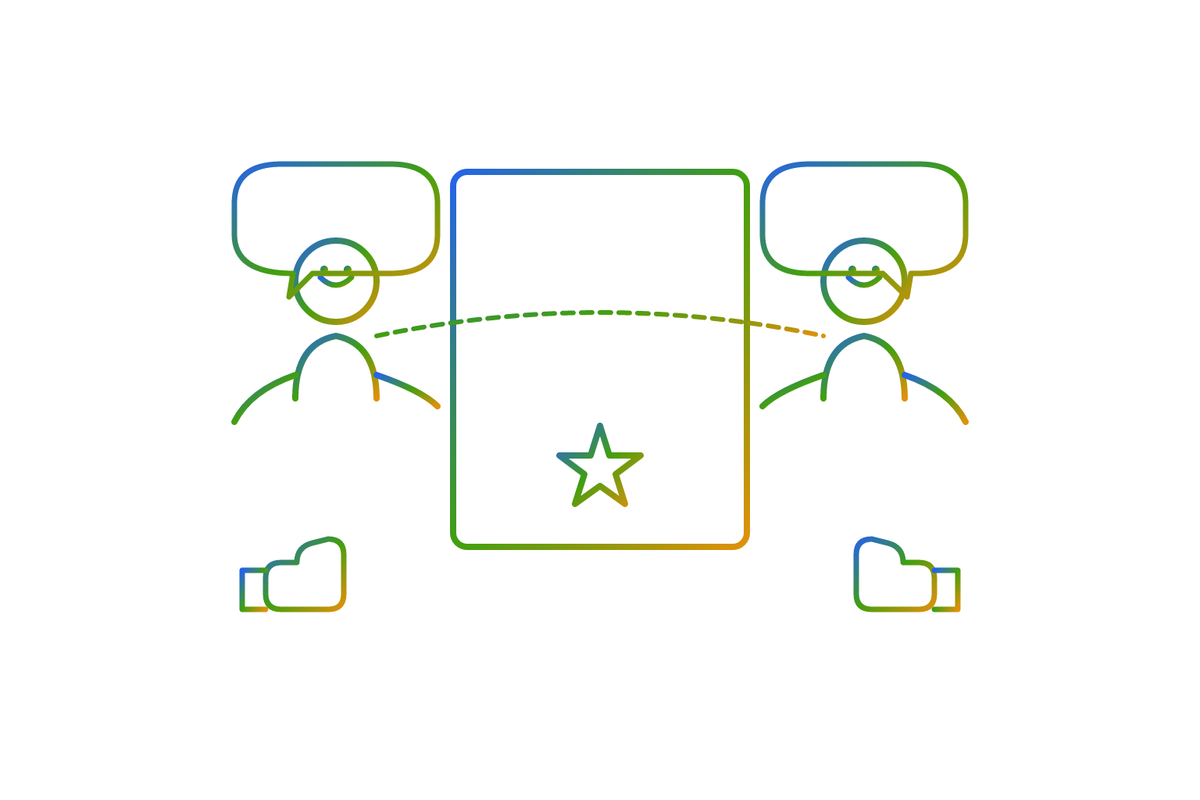
Customer service is the floor, and customer relations is the ceiling. You can't build one without the other holding it up, and I've watched companies try both mistakes at once, thinking speed alone would cover for warmth.
Good service, done right, feeds straight into relations. Every resolved ticket tells you something about where customers actually struggle, and every solid interaction adds to a trust account whether anyone's tracking it that way or not. Most teams treat "ticket closed" as the end of the story, when it's really just the first data point in a much longer one, and treating it otherwise is how you end up surprised by churn you had six months of warning on.
Structurally, that means building the two functions on different terms entirely. Service needs clear ownership, fast feedback loops, and event-level metrics: CSAT, First Contact Resolution, Average Handle Time. Relations needs people from across the company feeding it signals, lifecycle metrics like CLV, NPS, and NRR, and an actual outreach calendar instead of a queue waiting to be worked down. They can sit in the same department if that's how your org chart shakes out, but give them one shared mandate and reactive work eats the proactive work every time, since reactive demand always shows up first, and always shouts loudest.
Research consistently finds that the large majority of consumers value personalized loyalty programs. That's where relations budgets belong: lifecycle moments, not another round of transactional follow-up emails nobody asked for.
Which function matters more isn't really the question, and I'd argue it never was. The question is whether you're staffing and measuring both well enough that every resolved moment stacks into something that lasts, instead of just clearing a queue and calling it a day.