Best Cloud Platforms for Tracking Customer Interactions
Pick the right platform type for your actual customer interaction problem, not a generic tool.
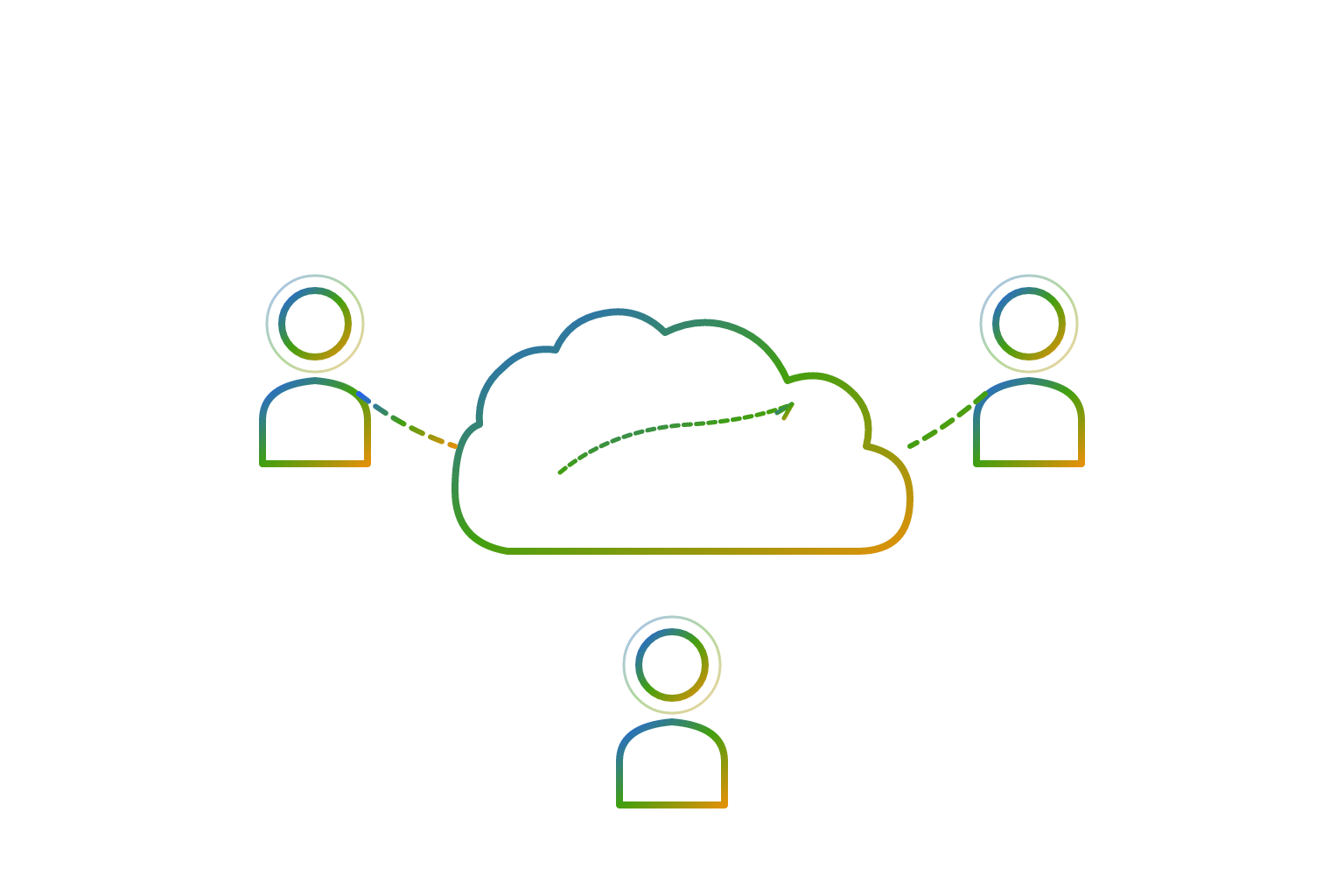
"Customer interaction tracking" is not one shopping category, it's at least four wearing a trenchcoat. Sales pipeline tracking, cross-channel behavioral data, support ticket volume, and phone call content are four different problems with four different data models, and a team that shops for "the best platform" without picking one first ends up comparing a CRM against a contact center suite. Those tools aren't competitors. They don't even play the same sport.
The market's growing fast enough that this confusion has room to spread. SaaS CRM was valued around $68.50 billion in 2025, and it's on track to hit $224.43 billion by 2035, a 12.60% compound annual growth rate. Lead management and conversion tools took the largest application slice in 2025, at roughly 25% share, which tells you where the money's flowing right now. But omnichannel engagement is set to grow fastest from 2026 through 2035, which tells you where the gaps still are. This guide walks through each interaction type and matches it to the platform built for it, starting with why SaaS breaks the generic CRM playbook in the first place.
Why SaaS Breaks Generic CRM Playbooks
Picture the textbook five-stage sales pipeline: lead, qualify, demo, negotiate, close. Now try applying it to an actual SaaS deal. The champion goes dark for three weeks because she's on parental leave. Procurement shows up out of nowhere in week seven. Then IT wants a security review two days before the contract's supposed to sign. That linear pipeline is a nice story, and it's almost never what happened.
Recurring revenue changes the whole definition of an interaction. In a one-time-sale business, the relationship basically ends at the signature. In SaaS, closing the deal is the opening scene, not the finale. Renewals, expansions, support escalations, and churn risk signals keep showing up for years, and a CRM built for one-and-done sales cycles doesn't have a place to put them.
A SaaS-native CRM needs subscription tier, seat count, payment history, and support ticket history sitting in the same record as core fields, not custom properties someone bolted on during onboarding. The interaction types worth tracking break down cleanly:
Pre-sale: lead capture, pipeline movement, call and email history
Post-sale: onboarding steps, renewal signals, expansion conversations
Support: ticket volume, resolution time, escalation paths, CSAT scores
Revenue signals: call recordings, coaching moments, win and loss patterns
A team mostly worried about pre-sale pipeline needs something very different from a team trying to catch churn before it happens.
Best CRMs for Pipeline and Contact History
This category has one job: hold contact and account data, track deals as they move through stages, log every call and email, and flag which deals are at risk. The interaction record lives here.
HubSpot CRM starts free and scales as the team grows, which makes it a natural fit for smaller SaaS companies that don't want to sign an enterprise contract before they've proven the sales motion works. Sales and marketing features share one data model, so every touchpoint, including email opens, website visits, and deal stage changes, ties back to a single customer record instead of living in three different tools. CSAT and NPS survey capabilities are available within the platform.
Salesforce Sales Cloud offers heavy customization, detailed reporting, and connections into Marketing Cloud and Service Cloud that let a company track interactions across the entire customer lifecycle in one place. It's the standard enterprise sales teams default to, though the cost and setup time are real, and smaller SaaS teams often find the implementation heavier than what they actually need.
Zoho CRM covers sales automation, AI-driven insights, and multichannel messaging at a price well under Salesforce, handling lead tracking and deal closing in one interface. It's the option for teams that want Salesforce-style range without the Salesforce-size invoice.
Freshsales, part of the Freshworks family, pairs AI insights with a streamlined onboarding process. Because it sits next to Freshdesk, support conversations can connect back to the sales record instead of living in a separate silo.
The real question across this whole category is how well the CRM handles post-sale interactions such as renewals, expansions, and escalations natively, or whether it needs custom fields and third-party integrations to approximate that functionality.
ChartMogul CRM: Built Around Subscription Metrics
ChartMogul CRM flips the usual CRM setup on its head. Instead of starting with contacts and bolting on revenue data later, it starts with subscription analytics including MRR, churn, and expansion, then builds the customer record around that. Billing events connect directly to pipeline activity, so a revenue team can see a customer's churn risk and expansion opportunity sitting right next to their deal stage on the same screen.
It's built specifically for B2B SaaS founders and operators, not adapted from a generic sales tool with a few subscription fields tacked on. The interaction type it tracks better than almost anything else on this list is the subscription lifecycle event: upgrades, downgrades, and cancellations treated as signals that should trigger outreach from sales or customer success.
The trade-off is scope. It's narrower than HubSpot or Salesforce, and it's not designed to manage a complicated enterprise sales process with six stakeholders and a legal review. It's built to answer one question: what's this customer's revenue trajectory, and who needs to know about it right now?
Revenue Intelligence Platforms That Decode Conversations
A CRM field can't capture everything that matters in a sales call. "Demo call completed" is a checkbox. It doesn't tell anyone what objection came up, which competitor got name-dropped, or whether the champion sounded engaged or checked out. Revenue intelligence tools exist to fill in everything the checkbox leaves blank.
Gong records, transcribes, and analyzes sales calls, then surfaces patterns in those conversations based on what got said, not just whether a call happened. It's built for B2B sales environments where the content of a conversation decides whether a deal closes. Gong sits next to a CRM rather than replacing it: the conversation data feeds into and enriches the pipeline record instead of living somewhere separate.
AI-powered capabilities like sentiment detection and predictive analytics are becoming increasingly common across the call analytics category in 2025, and the category is moving fast.
Worth flagging: this only works if the sales team actually uses it, and call recording brings its own consent and compliance requirements depending on where customers are located. Treat this as a layer that sits on top of a CRM, not a replacement for one.
Support Platforms Built for High-Volume Ticket Resolution
This category centralizes inbound requests from every channel, routes them to the right agent, tracks how long resolution takes, enforces service-level agreements, and measures agent performance. The interaction data here is support data.
Zendesk's CX Trends 2026 research, surveying 6,182 consumers, found that 88% expect faster responses than they got a year ago. That's not a vague vibe, it's a number, and it's the kind of operational pressure that explains why support platforms keep adding automation and AI features every year.
Zendesk runs on a centralized ticketing system for tracking and resolving requests, and its QA tool reviews all interactions rather than a sample to catch churn risk before it turns into a cancellation. AI-powered workforce management provides real-time performance insight and staffing forecasts, and prebuilt dashboards pull every channel's data into one view. It's built for high-volume environments and enterprises that need strict SLA tracking and detailed performance analytics.
Freshdesk covers email, chat, and social in one system, with custom ticket fields for prioritization, per-issue time tracking, and canned responses for speed. Its analytics cover customer satisfaction in enough depth for most teams, and it serves everyone from small startups to large enterprises, generally with an easier on-ramp than Zendesk for teams still building out their support function.
HubSpot Service Hub deserves a spot in this comparison because every support ticket ties back to the full CRM record, including purchase history, marketing activity, and sales conversations, all in one place. That's its structural edge over standalone helpdesks. What it trades away is some of the workforce management depth and analytics granularity that Zendesk offers. Teams that need serious SLA control and support analytics tend to lean toward Zendesk, while teams that want support sitting inside the same record as sales and marketing tend to lean toward HubSpot.
Enterprise Contact Centers for Omnichannel Scale
Helpdesks handle tickets. Contact center platforms handle voice, chat, email, social, and messaging all in one routing layer, with AI deciding which agent gets which interaction, coaching agents in real time, and running analytics across all of it. Tracking is baked into the infrastructure that runs the interactions in the first place.
Genesys Cloud CX unifies voice, email, chat, chatbots, and social messaging under one AI-driven system, and centralizes customer data to sharpen routing decisions over time. It ships with over 600 prebuilt integrations and more than 3,000 public APIs for custom builds. It also holds FedRAMP Moderate Authorization, TX-RAMP Level 2, and DoD IL2 Provisional Authorization, which matters significantly if the buyer is a federal agency or a DoD contractor. Pricing for 2025/2026 runs from CX 1 at $75 per named user per month up to CX 4 at $240, which includes 30 AI Experience tokens per agent.
NICE CXone (CXone Mpower) runs omnichannel routing, contact center analytics, workforce management, and AI automation on an open cloud base, and its Enlighten Actions and business process analytics tools are built specifically to find automation opportunities inside interaction data. NICE processes more than 20 billion interactions a year, a scale that reflects how deep its workforce optimization tooling goes. Its 2025 acquisition of Cognigy adds agentic AI on top of what was already a strong workforce management foundation. Pricing runs cheaper than Genesys at comparable tiers, with CXone Core at $110 versus Genesys CX 2 at $115, and the gap widens further up the stack where CXone Ultimate starts at $135 against Genesys CX 4 at $240.
That pricing gap at the top tier is worth careful consideration. Any team planning to lean hard on AI features at scale should model the cost difference against the actual capability gap before signing anything. Federal compliance requirements favor Genesys, while workforce optimization depth and raw cost favor NICE.
Neither platform makes sense for a team that just needs sales pipeline tracking or basic ticket management. These are built for contact center operations at serious volume, and using one to manage a 200-ticket-a-month support queue would be like hiring an air traffic controller to direct a two-car parking lot.
Journey Orchestration Platforms That Personalize at Scale
This last category isn't really about record-keeping. It's about unifying interaction data from every source into one profile, then using that profile to run personalized journeys across channels automatically. Tracking here is in service of decision-making, not documentation.
Salesforce Marketing Cloud Engagement orchestrates journeys across email, SMS, push notifications, and social, drawing on unified customer data pulled from Sales Cloud, Service Cloud, and Commerce Cloud. Its Journey Builder tool is built for designing complex, multi-step, cross-channel sequences. It makes the most sense for mid-market and enterprise companies already running on Salesforce, since the integration advantage only pays off if Salesforce is already the system of record. Bolting it onto a non-Salesforce stack mostly just adds complexity.
Adobe Journey Optimizer runs on Adobe Experience Platform and targets large organizations already deep in the Adobe Experience Cloud ecosystem. It uses AI for real-time decisioning and journey design, with unified customer profiles as the base layer everything else builds on. It fits enterprises running complicated, highly personalized omnichannel experiences where Adobe already owns the data and content layer, not companies looking to bolt personalization onto an otherwise unrelated stack.
The throughline across all seven categories here is the same: the right platform follows from the interaction type that actually needs tracking, not from which brand shows up first in a Google search or which vendor has the longest feature list. Pick the problem first. The platform follows from that, every time.